Order a cappuccino after dinner in Italy and nothing will happen. The waiter will bring it, perhaps with one eyebrow raised by a millimetre, and that is the whole of the penalty. Italian dining etiquette is like that: a set of habits that exist to look after the food, not to catch out the guest.
Still, a little of the grammar helps a meal make sense. This is what the table quietly expects, from ALBA, an Amalfi-inspired Italian restaurant in Knightsbridge with a Japanese menu and an omakase counter, where the conventions are kept lightly and the evening is yours.
Pasta, Bread and Cheese
Long pasta is twirled on the fork against the curve of the plate. It is never cut, and the spoon is a foreign habit that Italians regard with mild sorrow. Bread is for the table and not for the sauce, with one exception that everybody allows: the scarpetta, the "little shoe" of bread that wipes the plate clean at the end. It is a quiet compliment to whoever cooked. Grated cheese goes on most pasta and on no seafood pasta. A plate of clams, prawns or lobster arrives without it, and that is on purpose. Pizza is eaten with a knife and fork at a table in Italy and with the hands in the street, and in London either will do.
The Order of Things
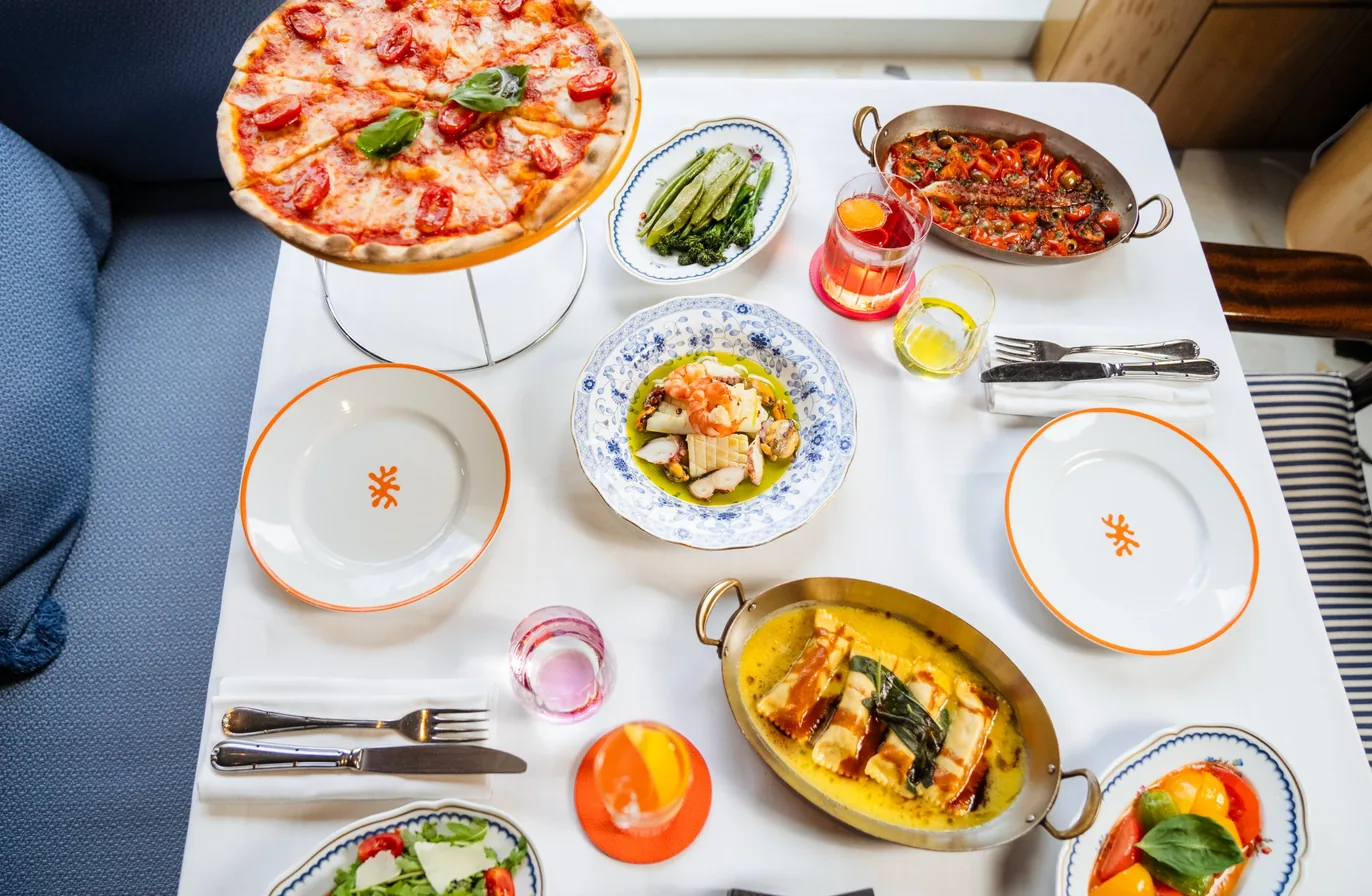
A full Italian meal moves in a set order, but the names on the menu describe that order and oblige you to nothing. Aperitivo comes before you sit down: a Spritz, a Negroni, something cold and bitter to wake the appetite. Antipasti open the table. The primo is pasta, risotto or soup. The secondo is the meat or the fish, usually served plain, with the vegetables, the contorni, ordered separately and set beside it. Then dolce, then coffee, then a digestivo.
Nobody expects all of it. Two people might share antipasti, have a pasta each and finish with one dessert and two spoons, and that is a complete Italian meal. Order what you want and skip the rest without apology.
Coffee, and the Cappuccino Question
Coffee ends an Italian meal and never begins one. The closing cup is an espresso, short and quick, after dessert and not with it. The cup itself, and the family of coffees around it, is in our guide to Italian espresso. Cappuccino and caffè latte belong to the morning, on the grounds that milk sits heavily after a meal, and this is the one rule visitors are teased for breaking. The teasing is affectionate. If you want a cappuccino at eleven at night, you will get one. The proper end to the evening, if you would like it, comes after the coffee: a Limoncello, a grappa or an amaro.
Time at the Table
The most important Italian convention has nothing to do with cutlery. A meal is meant to last. Lunch takes two hours and dinner three or more, and once you are seated the table is yours. The idea of being moved along to make room for the next party is, in Italy, close to an insult. Conversation is loud, hands do half the talking, and phones stay in pockets. Compliments travel best in person, and they reach the chef faster than you would think.
On the bill, Italy often adds a cover charge or a line for service, and rounding up for good service is welcome and not expected. In London, read the bill and ask if anything is unclear.
How It Goes at ALBA
ALBA keeps the Italian rhythm and leaves the rules at the door. Aperitivo Hour runs from 3pm to 7pm every day, which is the natural place to start. The menu moves through antipasti, handmade pasta, dishes from the fish counter and the grill, and desserts worth staying for, and you can order the whole arc or two plates and a glass. On Sundays the Italian Sunday roast runs through the afternoon. The espresso comes at the end. The pass is in full view of the room, so the compliment can be delivered in person. Book a table, order what you like, and take your time.
Frequently Asked Questions
Is it rude to cut spaghetti in Italy?
It is not rude, but it is noticed. Long pasta is twirled on the fork against the curve of the plate, without a spoon.
Can I put Parmesan on seafood pasta?
In Italy, no. Cheese overwhelms the fish, so seafood pasta arrives without it on purpose.
What is the order of courses in an Italian meal?
Aperitivo, antipasti, primo, secondo with contorni, dolce, coffee and a digestivo. Order any of them and skip the rest.
