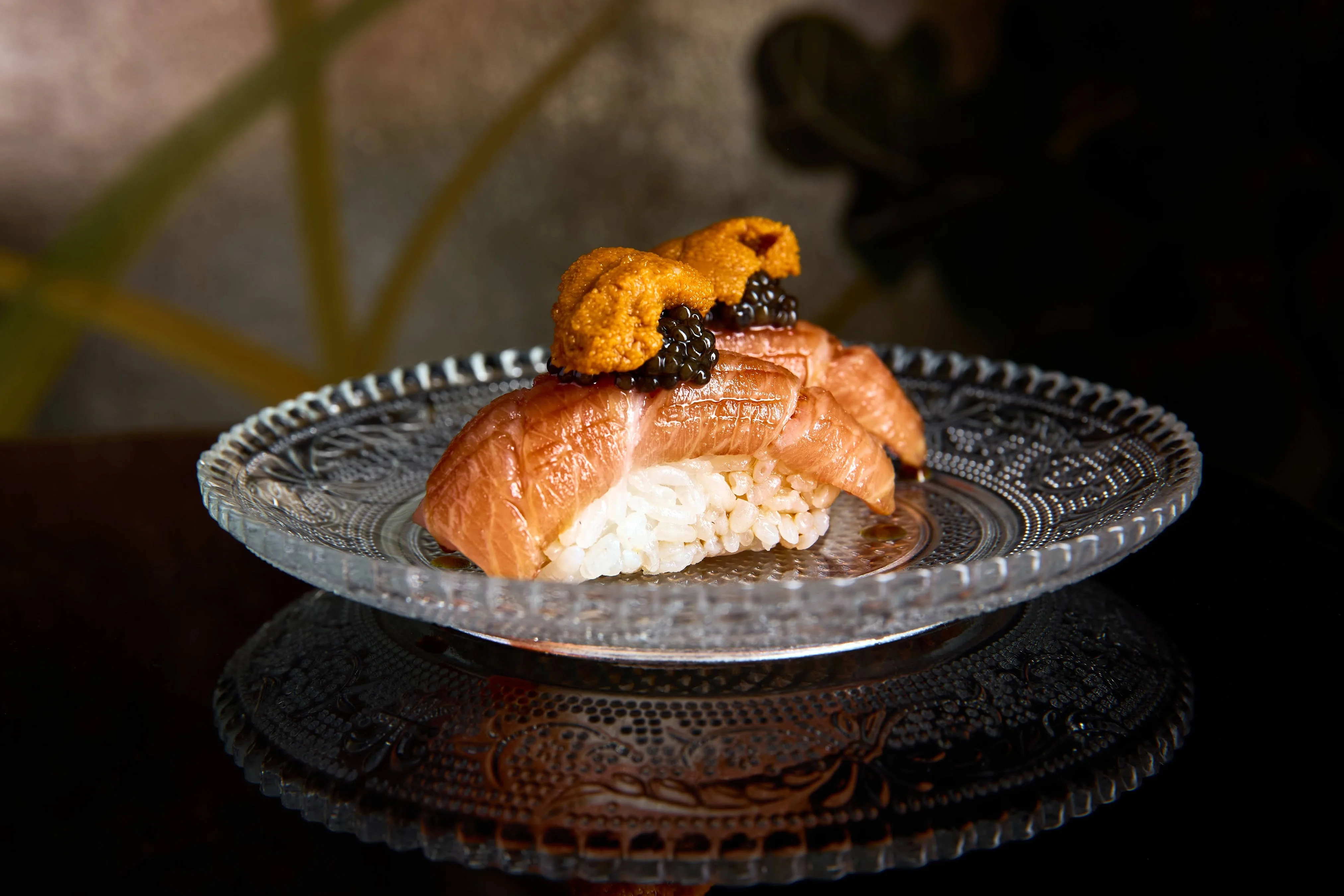
Two coastlines, thousands of miles apart, laid the same table. On the Amalfi Coast, it is called crudo. In Japan, sashimi. Both take the finest thing the sea offers and do almost nothing to it. Now, at ALBA in Knightsbridge, opposite Harrods, they finally meet under one roof - crudo at the fish counter, sashimi at the new omakase counter in Knightsbridge. This is the story of how one sea came to be spoken in two languages.
Below, we trace the shared instinct behind crudo and sashimi, where they differ, and how ALBA brings them together.
One Instinct, Two Coasts
All along the Amalfi Coast, and further south in Puglia and Sicily, fishermen have long cracked open ricci di mare - sea urchin - at the water's edge and eaten the roe raw, with nothing but a squeeze of lemon and a piece of bread. It is the same soft, briny, faintly sweet treasure the Japanese prize as uni. Neither tradition invented the other. They simply reached the same conclusion independently: when the catch is good enough, the cook's job is to stay out of the way.
That is the instinct beneath both crudo and sashimi. Restraint, precision, and complete trust in the ingredient. Everything else - the lemon, the soy, the knife work - is in service of the fish, never a disguise for it.
Where Crudo and Sashimi Differ
The shared philosophy does not make them identical, and the differences are part of the pleasure. Italian crudo tends to dress the fish, lightly: good olive oil, citrus, sea salt, sometimes a whisper of chilli or herb. The seasoning frames the seafood without overwhelming it.
Japanese sashimi leans further toward purity - the fish, a precise cut, and little more than soy, wasabi or a grating of fresh ginger to accompany it. The knife work carries much of the craft, each slice judged to the texture of the particular fish. One tradition seasons at the surface; the other perfects the cut. Both are chasing the same thing from different directions.
The Same Catch, Two Ways
Put them side by side and the overlap is striking. The ricci di mare a Neapolitan eats straight from the shell and the uni served, immaculately, across a Japanese counter are the same treasure, prepared two ways. A crudo of raw sea bream and a sashimi of the same fish are close cousins. Even the finishing touches rhyme - Italy's lemon and Japan's citrus-based ponzu are, at heart, the same idea.
How ALBA Brings Them Together
ALBA's ten-seat omakase counter is led by the restaurant's Japanese Head Chef Takuya Kaneko, with tasting menus created by Creative Chef Dmytro Pak, who has spent the past years mastering the art of Japanese dining at UNI in Paris. Across the counter, hand-selected uni, otoro, caviar and the day's finest catch are served course by course, in the omakase tradition - the Japanese half of a story the restaurant's Amalfi kitchen has been telling all along. Guests who love ALBA for its crudo will recognise exactly what they are looking at: the same sea, the same respect, a second language.
The counter offers a nine-course or twelve-course chef-curated tasting menu at a single nightly seating, with a Japanese à la carte menu served daily alongside. As an Italian restaurant in Knightsbridge with the sea at its heart, ALBA is simply following that sea a little further east. Reservations for the omakase counter are open through the ALBA website.
Frequently Asked Questions
What Is the Difference Between Crudo and Sashimi?
Both serve raw seafood with minimal intervention. Italian crudo tends to dress the fish lightly with olive oil, citrus and salt, while Japanese sashimi leans toward purity, letting precise knife work and simple accompaniments like soy and wasabi carry the dish.
What Do Crudo and Sashimi Have in Common?
The same instinct: take the finest seafood the sea offers and do as little to it as possible. Both traditions are built on restraint, precision and trust in the ingredient.
What Is Uni, and How Does It Relate to Ricci di Mare?
Uni is the Japanese name for sea urchin roe. Ricci di mare is the Italian equivalent, long eaten raw along the Amalfi Coast - the same delicacy prized on both coastlines.
How Does ALBA Combine Italian and Japanese Raw Seafood?
ALBA's Amalfi-inspired kitchen has always centred on raw, seasonal seafood. Its omakase counter reads that same reverence through a Japanese lens, led by Japanese Head Chef Takuya Kaneko, with tasting menus created by Creative Chef Dmytro Pak.
How Do I Book ALBA's Omakase Counter?
Reservations are open through the ALBA website. With ten seats and a single nightly seating, tables are limited.
